
The Unseen Workhorse
The shale shaker is not “advanced technology”—it is a mechanically simple, physically essential component. Positioned where drilling fluid first returns to surface, its sole task—separating cuttings from fluid—delivers concrete, measurable benefits across safety, cost, and operational continuity. Below are field-verified advantages, stripped of marketing language.
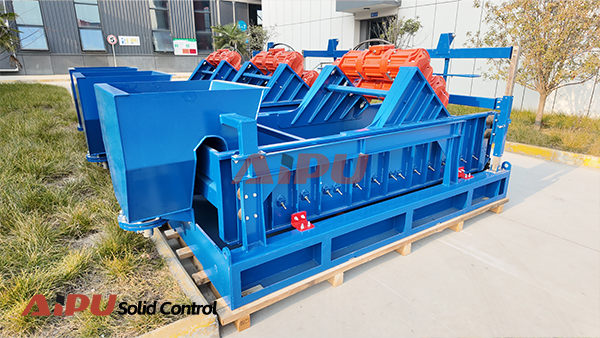

Core Benefits (Fact-Based)
1. Protects Downstream Equipment
- Removes >90% of coarse cuttings (>74 μm) before fluid reaches pumps, desanders, or centrifuges.
- Result: Reduced abrasive wear on pump impellers, valve seats, and hydrocyclone liners. Field crews consistently report fewer pump rebuilds and longer hydrocyclone service intervals when shaker performance is maintained.
2. Preserves Drilling Fluid Properties
- Unremoved solids increase mud density and viscosity unpredictably.
- Example: In water-based mud, every 1% increase in low-gravity solids can raise plastic viscosity by 5–8 cP, impairing hole cleaning and elevating equivalent circulating density (ECD).
- Result: Stable rheology supports consistent hydraulics, reducing risks of poor hole cleaning or wellbore breathing.
3. Lowers Fluid Consumption & Cost
- Recovers >95% of liquid phase for immediate recirculation.
- Impact: In oil-based mud ( 400–400– 700/m³), saving just 3 m³/day avoids 1,200–1,200– 2,100 in daily fluid replacement and chemical rebalancing costs. No recovery = constant makeup = higher expense.
4. Reduces Waste Volume & Disposal Cost
- Dry cuttings discharge (moisture ≤15%) directly cuts waste weight.
- Rule of thumb: A 10% reduction in cuttings moisture lowers disposal weight by ~8–10%.
- Practical effect: Fewer truckloads to landfill, lower disposal fees, and simpler compliance with site-specific environmental limits (e.g., moisture caps in offshore operations).
5. Supports Wellbore Stability
- Excess solids contribute to:
- Thick, uneven filter cakes → differential sticking risk
- Cuttings beds in high-angle sections → torque spikes, stuck pipe
- Result: Consistent solids removal maintains cleaner annulus and stable mud properties, directly supporting safer tripping and drilling.
6. Enables Reliable Geological Evaluation
- Clean, dry cuttings at the discharge point allow mud loggers to:
- Accurately identify lithology
- Detect formation changes
- Support real-time drilling decisions
- Critical note: Wet, mud-coated cuttings lead to misinterpretation. Proper shaker operation is foundational to logging quality.
7. Minimizes Non-Productive Time (NPT)
- A well-maintained shaker avoids:
- Frequent screen changes due to blinding or tearing
- Downstream clogs requiring circulation stops
- Mud property corrections mid-operation
- Field observation: Teams with disciplined screen management and parameter checks report 30–50% fewer shaker-related interruptions per shift.
How to Realize These Benefits (No “Magic”)
表格
| Action | Why It Matters |
|---|---|
| Match screen mesh to cuttings size | Prevents blinding (too fine) or solids carryover (too coarse). Do a quick sieve test on returned cuttings. |
| Maintain proper screen tension | Slack screens tear; overtightened screens crack frames. Use a tension gauge (180–220 N/m). |
| Adjust G-force per mud type | Water-based: 5.5–6.5G; Oil-based/high-viscosity: 6.5–7.5G. Verify with a handheld vibration meter. |
| Keep frame and springs clean | Accumulated mud jams motion, reduces efficiency. Clean after each shift. |
| Train operators on visual cues | Ideal discharge: “bread crumb” texture. Wet clumps = too low G-force; dry powder blowing off = too high. |
What It Does Not Do (Clarity Matters)
❌ Does not remove fine solids (<74 μm) – that requires desilters or centrifuges.
❌ Does not “optimize itself” – performance depends entirely on correct setup and maintenance.
❌ Does not replace human judgment – operators must observe, adjust, and document.
Conclusion: Value Through Simplicity
The shale shaker delivers value not through complexity, but through consistent execution of one physical task: separating solids from fluid. Its benefits are direct, cumulative, and indispensable:
- Less equipment wear
- Stable mud properties
- Lower fluid and waste costs
- Safer wellbore conditions
- Reliable geological data
Investing attention—not hype—in its proper operation yields daily, measurable returns. On every rig, in every well, it remains the non-negotiable foundation of effective solids control.
If you are interested in the article, please feel free to share it: https://shakerscreens.org/shale-shaker-screen/practical-benefits-of-shale-shakers-in-drilling-operations.html
If you are interested in our equipment, please feel free to contact me at info@aipusolidcontrol.com
