
The Unsung Hero of the Oilfield
In the complex ecosystem of an oil and gas drilling rig, where pressures reach thousands of PSI and equipment costs run into the millions, there is one piece of machinery that quietly determines profitability and safety: the shale shaker. Often overlooked by those outside the industry, the shale shaker is the first and most vital line of defense in a process known as solids control.
When a drill bit grinds through rock formations miles beneath the earth’s surface, it generates tons of crushed rock called drill cuttings. These cuttings mix with the drilling fluid (or “mud”), creating an abrasive slurry that, if not treated, will destroy pumps, wear out drill pipe, and slow drilling to a crawl.
This article provides a definitive, SEO-optimized explanation of what a shale shaker is, how it functions, its key components, and why it is indispensable for modern drilling operations.
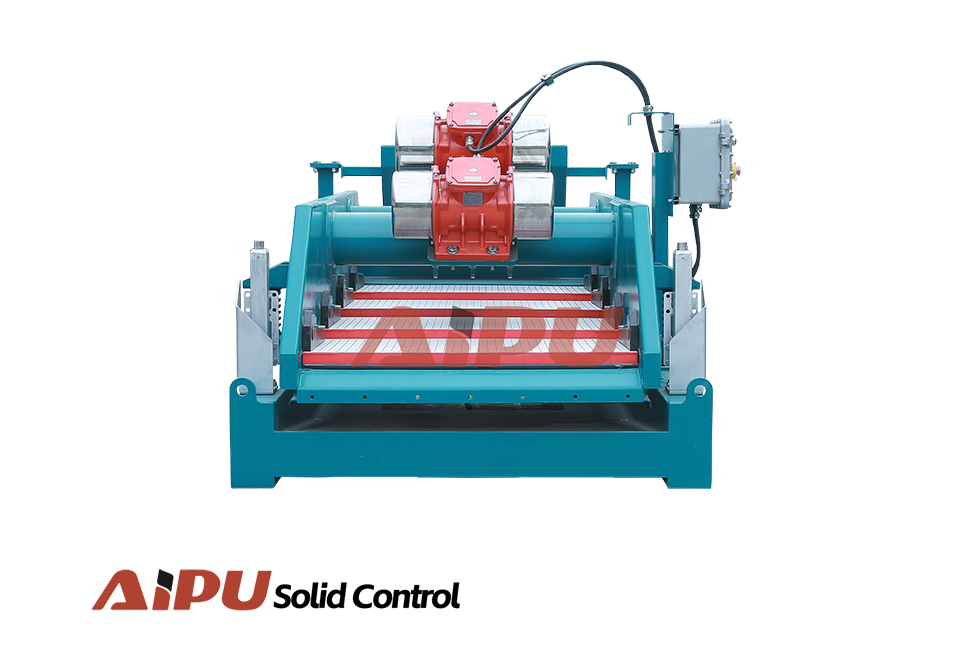

Chapter 1: Defining the Shale Shaker
What is a Shale Shaker?
A shale shaker is a vibrating mechanical separator used primarily in the oil and gas industry, as well as in horizontal directional drilling (HDD), mining, and trenchless construction. Its sole purpose is to remove large solid particles—specifically drill cuttings—from the liquid drilling fluid (mud) returning from the wellbore.
In technical terms, the shale shaker is first-stage solids control equipment. It utilizes one or more vibrating screens (sieves) to filter out solids larger than a specific micron size, typically between 74 and 600 microns, depending on the screen mesh installed.
Think of it this way:
- The Problem: Mud comes back from the hole full of rocks, sand, and clay.
- The Solution: Pour that dirty mud over a violently shaking, fine-mesh screen.
- The Result: Clean mud falls through the screen to be reused. Dry(ish) rocks and cuttings vibrate off the end and are discarded.
Without a functioning shale shaker, the entire downstream mud cleaning system—desanders, desilters, and centrifuges—would instantly clog and fail.
Chapter 2: How Does a Shale Shaker Work? A Step-by-Step Mechanical Breakdown
The efficiency of a shale shaker relies on the precise combination of vibration force (G-force), screen technology, and deck geometry. Here is the exact process flow:
Step 1: Flow Distribution (The Possum Belly)
Drilling mud exits the wellbore annulus via the flowline and enters a receiving tank on top of the shaker called the possum belly. This compartment acts as a buffer and a flow spreader. It ensures the mud is evenly distributed across the entire width of the screen via a weir gate. If the mud is allowed to hit the screen in a single concentrated stream, it will “cut” or tear the screen immediately.
Step 2: Vibration and Stratification
One or more vibrator motors spin eccentric weights, generating a controlled shaking motion. This motion is usually linear (straight line), elliptical, or circular.
- Linear Motion: High G-force, pushes solids uphill efficiently. Best for high-volume drilling.
- Elliptical Motion: Softer action. Better for “sticky” clay formations (gumbo) to prevent screen plugging.
The vibration causes the solid-laden mud to stratify. Heavier, larger cuttings sink to the bottom of the fluid layer where they contact the screen mesh, while the lighter, cleaner fluid passes through the openings.

Step 3: Filtration Through API Screens
The screen is the heart of the operation. Liquid mud passes through the tiny openings in the API RP 13C compliant screen. The size of these openings determines the cut point—the smallest particle size the shaker can remove. The fluid passing through the screen (known as underflow) is collected in the mud tank for recirculation downhole.
Step 4: Solids Conveyance and Discharge
Because the shaker deck is mounted at a slight upward angle (adjustable from roughly -1° to +5°), the vibration literally throws the solid cuttings up the slope. The cuttings “hop” or “walk” toward the back of the shaker, where they fall off the end as a relatively dry pile of waste rock.
Chapter 3: Anatomy of a Shale Shaker – Key Components Explained
To understand what a shale shaker is, you must understand its parts.
| Component | Function & Technical Insight |
|---|---|
| Shaker Basket / Deck | The structural framework that holds the screens. It must be dynamically balanced to prevent cracking from fatigue stress. |
| Vibrator Motors | Explosion-proof electric motors with adjustable counterweights. The weight offset determines the stroke and G-force. Target range for drilling is 6.0G to 7.5G. |
| Shaker Screens | The consumable. They are classified by API Number (e.g., API 140, API 200). The higher the number, the finer the mesh. Modern screens are 3D/Pyramid screens to increase Non-Blanked Area (NBA) and fluid capacity. |
| Deck Angle Adjuster | A hydraulic or manual jack. Rule of Thumb: Flatter angle = Higher fluid capacity, wetter cuttings. Steeper angle = Drier cuttings, lower fluid capacity. |
| Crown Rubber / Seal Strips | Rubber gaskets that prevent mud from bypassing the screen and leaking directly into the clean tank. Bypass is the #1 cause of mud system failure. |
Chapter 4: The Science of the Screen – Understanding API RP 13C
You cannot discuss what a shale shaker is without discussing API Screen Designation.
Before 2004, screens were labeled with confusing “Mesh” numbers that didn’t correlate to actual opening size. The American Petroleum Institute standardized this under API RP 13C.
How to Read an API Screen Label:
- API 100: Removes solids larger than ~140 microns.
- API 140: Removes solids larger than ~100 microns.
- API 200: Removes solids larger than ~74 microns. (Ultra-fine, used for expensive synthetic mud systems).
The Cut Point Curve: No screen is perfect. An API 170 screen does not catch 100% of particles 90 microns and larger; it catches a D100 cut point curve. The sharper the curve, the better the screen manufacturing quality.
Chapter 5: Types of Shale Shakers in Modern Drilling
| Type | Description | Application |
|---|---|---|
| Single Deck | One layer of screens. Simple design. | Older rigs, shallow water wells, low budget operations. |
| Dual Deck (Cascade) | Top deck (Scalping) protects the bottom deck (Finishing). | Industry Standard. Top screen uses coarse mesh (API 20-40) to catch large rocks; bottom screen does fine filtration (API 140-200). |
| Triple Deck | Three stacked screens. | Offshore rigs or high-density land drilling where footprint space is limited but fluid volume is extreme. |
| Dual-Linear Motion (D-Line) | Two sets of motors running at slightly different speeds. | Creates a “rolling” motion to combat gumbo (sticky reactive clay) that blinds standard shakers. |
Chapter 6: Why is the Shale Shaker So Important? The Economic Impact
The question “What is a shale shaker?” is often asked by newcomers. The veterans ask: “How much is this shaker saving me per foot?”
1. Pump and Surface Equipment Protection (The Sandblasting Effect)
Drill cuttings are essentially tiny, sharp rocks traveling at high velocity. If the shaker fails to remove them, they act as an abrasive slurry sandblasting the inside of mud pump pistons, liners, and valves. A single fluid end replacement on a triplex pump can cost $50,000 – $100,000. A good shaker prevents this.
2. Increased Rate of Penetration (ROP)
Clean mud creates less Equivalent Circulating Density (ECD) and less “chip hold-down” pressure on the new rock being drilled at the bottom of the hole. Removing fine solids allows the bit to drill faster. Industry data suggests a 15-20% increase in ROP when Low Gravity Solids (LGS) are kept below 6% volume.
3. Mud Cost Reduction
When cuttings build up in the mud system, the density and viscosity increase. To fix this, rigs add expensive base oil or water (dilution) and more chemical additives. A high-performance shaker reduces dilution volume, saving millions annually on deep wells.
Chapter 7: Common Operational Problems and Solutions
Even the best shaker is only as good as its operator. Here are three critical issues:
Problem 1: Screen Blinding (Plugging)
- Symptoms: Mud flows over the screen instead of through it. Cuttings pile up wet.
- Cause: Sticky clay (shale) packing into screen openings.
- Solution: Switch to elliptical motion (if available), lower the deck angle, or use under-screen wash nozzles.
Problem 2: “Wet” Discharge / Lost Mud
- Symptoms: The cuttings falling off the end look like a mud pie, not dry pebbles.
- Cause: Screen mesh is too fine, or fluid throughput exceeds shaker capacity.
- Solution: Increase deck angle (slows travel, increases retention time for drainage) or coarsen the top screen.
Problem 3: Torn Screens
- Symptoms: A distinct “stripe” of clean mud appears, or cuttings fall through in large clumps.
- Cause: Foreign objects (bolts, tong dies) falling down the flowline, or uneven tension.
- Solution: Pre-tension screens correctly. Install a scalping deck to catch “junk.”
Chapter 8: The Future of Shale Shakers
The definition of what a shale shaker is is expanding with Industry 4.0.
- Smart Shakers: Sensors measure real-time G-force and deck angle, alerting the driller via SCADA when performance drops.
- Pneumatic Tensioning: Replaces manual hammering with air bladders, ensuring perfect, uniform screen tension for longer screen life and sharper cut points.
- Dryer Shakers: Specifically designed for waste management. These units apply high G-force (8.0G+) for extended periods to reduce Oil on Cuttings (OOC) content for environmental compliance and offshore disposal.
Conclusion: The Foundation of a Profitable Well
So, what is a shale shaker? It is more than just a vibrating sieve. It is the guardian of the mud pump, the enabler of fast drilling, and the first checkpoint for wellbore stability.
Whether you are drilling a 1,000-ft water well or a 20,000-ft deepwater exploration well, the principle remains the same: If you don’t control the solids at the shaker, the solids will control your budget. Investing in high-quality shaker technology and, more importantly, training skilled Derrickmen and Shaker Hands, is one of the highest-return operational decisions an oil company can make.
If you are interested in the article, please feel free to share it: https://shakerscreens.org/solids-control-equipment/what-is-a-shale-shaker-the-complete-guide-to-solids-control-equipment.html
If you are interested in our equipment, please feel free to contact me at info@aipusolidcontrol.com
